
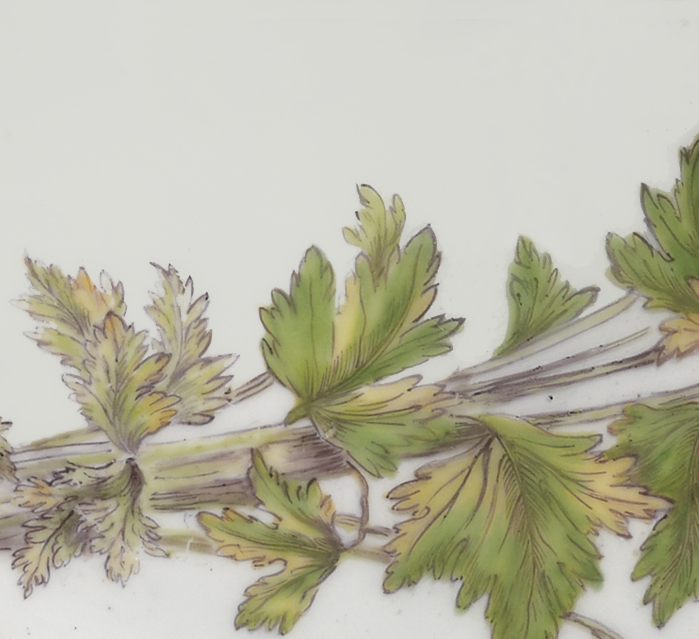
“Treasures: Creation, Emulation & Imitation”
Haughton International Lecture Series Held At The British Academy, 10 - 11 Carlton House Terrace, London SW1Y 5AH on Wednesday, 25th and Thursday, 26th June 2025
Media Transfer: Creating, Emulating and Imitating the Antique in Early Modern Europe
Dr Adriano Aymonino
Classical statues are the most imitated and emulated works of art in early modern Europe. For more than five centuries, from the early Renaissance to the end of the nineteenth century, artists and theoreticians used the Antique as a benchmark to meditate on concepts of imitation and individual creativity in the visual arts. Focusing on a few symbolic examples, this paper explores the phenomenon of adapting classical marble or bronze statues in a variety of media with different characteristics: from drawings and prints to plaster, wood, ivory, porcelain, glass and precious stones. What happens to the Antique when it is imitated or emulated in materials with traditions and representational conventions different from those of marble and bronze? How do different materials and techniques reinforce or challenge the concept and practice of imitating canonical models?
Canova: Sketching in Clay
Emerson Bowyer
Antonio Canova’s fame has always been tied to marble. Yet, underlying each polished stone statue was the more humble medium of clay. This talk explores the crucial and understudied role of clay within Canova’s studio, especially his quick compositional sketches in that material. Often produced at a lightning pace to capture his ideas, they are in many ways the antithesis of his exquisitely finished marbles. With surfaces pinched, pressed, gouged, and scraped, these sketches are visceral and expressionistic. Although never publicly exhibited or commercially marketed during his lifetime, they are extraordinary works of art in themselves.
The Helmschmids of Augsburg: German Renaissance Masters of the Art of Armour
Dr. Tobias Capwell
Armour was both equipment for fighting and expressive art of great power. By the sixteenth century, the art of the armourer in southern Germany had attained unrivalled technical sophistication, artistic conception, and decorative richness.
The centre of the German Renaissance armour world was Augsburg, whose community of virtuoso armourers were led by the Helmschmid family – several of whose members are counted amongst the greatest ever masters of their art.
Most notably, Lorenz Helmschmid and his son Kolman served as court armourers to the German Emperor Maximilian I, with Kolman succeeding as master after his father’s death and going on, with his son Desiderius, to create armour masterpieces for the Emperor Charles V and Prince Philip of Spain, amongst many other important clients.
In this talk we encounter the outstanding creations of these extraordinary sculptors in metal, and consider their significance to the wider artistic culture of their time, and beyond.
The Surtout De Table – From Trionfi Di Tavola to Gilt Bronze
IIvan Day
Corrado (1736-1836) was a cook and confectioner who worked for a number of Neapolitan noble families. In this important work, he suggests twelve iconographic schemes for dessert settings for each month of the year. All feature table sculpture arranged on mirror glass plateaux. In this dessert for May, a putto is crowning the figure of Primavera with a floral garland under a baldacchino, while other more local Neapolitan deities adorn the flanks of the surtout. Ivan Day will explore the evolution of these table centrepieces and the culture of the European surtout de table from the 1690s to the Empire.
The best teachers : Role models for porcelain production and a virtuoso in Nymphenburg
Dr. Katharina Hantschmann
Nature is considered the best teacher. However, in the porcelain manufactories, modelers and porcelain painters often used prints as inspiration and models for their figure creations or decorations. This applies not only to figurative scenes, such as those after Watteau, but also to landscapes and flower painting. Even in the bests manufactories such as Meissen or the Strasbourg faience manufactory, particularly impressive compositions were created with the help of graphics. One of the most beautiful flower services is the Munich court service created in the Nymphenburg manufactory with its bold flower painting and sculpturally designed flower vases. Its creator was Joseph Zächenberger (1732-1802), whose virtuosity was not limited to flowers. After leaving Nymphenburg in 1770, he created a sophisticated wine arbor in naturalistic paintings on silk. On the basis of newly discovered figurative scenes signed by him, the attributions within Nymphenburg painting need to be reconsidered.
Italian maiolica in the Rothschild collection at Waddesdon Manor; some case studies
J.V.G Mallet F.R.S.A and F.S.A. & Dr. Elisa P. Sani
The Italian maiolica at Waddesdon was collected by Alice de Rothschild in the early 20th century to replace objects bequeathed by her brother Ferdinand to the British Museum as the Waddesdon Bequest. The lecture represents work in progress by the speakers on the catalogue of this collection. Elisa Sani will concentrate on wares representing women including Deruta display dishes, a trencher from a childbirth set and an unusual dish with fourteen girls. John Mallet will discuss problems concerning two pieces based on major works of art which at the time had not been engraved: the first a dish probably made at Forlì about 1525-30 after figures from Michelangelo’s Sistine Chapel ceiling; the second an Urbino plaque by the Painter of the Coalmine Service with the Holy Family after Raphael
Changing Seasons: Sculptural Metamorphoses from the Royal Collection
Sir Jonathan Marsden
This talk will explore the themes of originality, emulation and imitation in sculpture, presenting some findings from new research undertaken during work on the forthcoming catalogue of European Sculpture in the Royal Collection, At the centre of the talk are Camillo Rusconi’s life-size marble groups representing the Four Seasons, created for a Roman palace in the 1690s but acquired only 30 years later for the apartments newly created for George I by William Kent at Kensington Palace. The four compositions invented by Rusconi were remarkably influential, and we can follow their migration through drawings, engravings, porcelain, painting and plasterwork in Italy, France, Britain and Ireland.
Ingenuity and plagiarism; the concept of originality in 18th century English pottery and porcelain figures
Roger Massey
In 1975 the Fitzwilliam Museum in Cambridge held an exhibition that was playfully entitled Plagiarism Personified. The curator, Julia Poole, demonstrated the nature and extent of copying in English and continental pottery and porcelain figures. The purpose of this lecture is to re-examine the concept of originality in 18th century English ceramic figures. We shall consider the many different design sources used by the English potters and porcelain makers. Although there is evidence of direct copying in the design of many of the figures, we should not overlook the many examples of skill, originality and ingenuity.
Archaism as Imitation: Recreating the Past in Chinese Porcelain
Professor Stacey Pierson
Imitating the designs, forms and marks of earlier porcelains has a long history in Chinese imperial ceramic production. From blue and white porcelains with the reign mark of an earlier emperor to monochromes with imitation Song stoneware glazes, this design practice encompasses a wide range of ceramic styles, colours and patterns. Using representative examples from the Yuan to Qing periods (14th-19th centuries), this lecture will introduce the history of this practice and consider the function and purpose of such ‘archaistic’ ceramics in court porcelain culture.
From imitation to modernity: Margaret and Flavia Cantagalli and the Art Nouveau
Justin Raccanello
The Manifattura di Maioliche Artistiche, Figli di Giuseppe Cantagalli has always been renowned as a factory devoted to making imitations of the fifteenth and sixteenth century ceramics which had become hugely sought after by museums and collectors alike in the second half of the nineteenth century. Little attention has been paid to the production, on a lesser scale, of objects in a contemporary style which were also a constant feature of the factory.
After the death of Ulisse Cantagalli in 1901, the factory was left in the very capable hands of his widow, Margaret and his artistically inclined daughter, Flavia. Through her mother’s close friendship with the writer and feminist Violet Paget (Vernon Lee), Flavia may have met Oscar Wilde during his stay in Florence in 1894 and she was one of the younger members of Paget’s circle which included Gabriele D’Annunzio, John Temple Leader, Bernard Berenson, the painters Telemaco Signorini and John Singer Sargent as well as her father’s friends the collectors Stibbert and Herbert Percy Horne.
There are very few written records mentioning the activity of Margaret and Flavia Cantagalli between the year 1901and 1914, but their continuing involvement in various exhibitions, documented in photographs and catalogues of the time, shows the enduring modernity of their designs. This brief talk will attempt to illustrate some of their first attempts to engage with the new Stile Liberty or Art Nouveau in the years 1900-1910.
Taxile Doat Ceramist: Imitation to Innovation
Linda Roth
Taxile Doat (1851–1938) was an exceptional ceramic artist and teacher, who harnessed the magic of the kiln to make brilliant works of art. Rooted in European and Asian traditions, his ceramics bridged traditionalism and innovation, as well as manufacturing and studio pottery. This talk will explore how Doat moved freely between imitation and innovation in his work for the National Manufactory at Sèvres (1877–1905) and his private studio production of high-fired porcelain and stoneware. At Sèvres, he specialized in pâte-sur-pâte decoration in the tradition of Marc-Louis-Emanuel Solon. He brought pâte-sur-pâte to his studio work, but devised time-saving techniques to create this normally laborious decoration and combined it in unique ways with grand-feu glazes inspired by Asian ceramics.
“All that glitters is not gold”: perception and deception in the world of goldsmithery
Dr Timothy Schroder DLITT, FSA
The title of this lecture is figurative rather than literal. For it is not so much about what an object is made of as about whether it is what it appears to be. Although delving into the murky world of fakes, it argues that the issues are often less clear cut than might appear, especially when the intentions of both maker and patron and taken into account. While some of the works we will be considering were demonstrably made to deceive, others, long considered fakes, can now be shown through archival evidence to have been commissioned as honest copies and should not be considered fakes at all. But the fact that some objects can be exonerated in this way should give us pause for thought before condemning others where we lack evidence either way.
Made in Paris? So-called poinçons de prestige on eighteenth-century goldboxes
Dr Heike Zech FSA
In 1740, Frederick II of Prussia imposed a ban on all imports of Paris objets de vertu into his territory, while simultaneously supporting Berlin makers through lavish commissions. Local goldsmiths developed their own distinct style, yet adopted marks similar to those used to guarantee the famous ‘touch of Paris’ on gold objects made in the French capital. Similarly, Swiss and Hanau gold box makers drew inspiration from Paris marks and designs. Their works continue to challenge, intrigue (and at times frustrate) specialists across all areas of the art world in equal measure. This survey reflects on research undertaken by leading experts over the last decades. It also asks how we can continue to develop our understanding of these marks in order to better appreciate the distinct qualities and cultural significance of the treasures they appear on.